
Why You Hate Selling (And the 100-Year-Old Reason It’s Not Your Fault)
Feb 24, 2026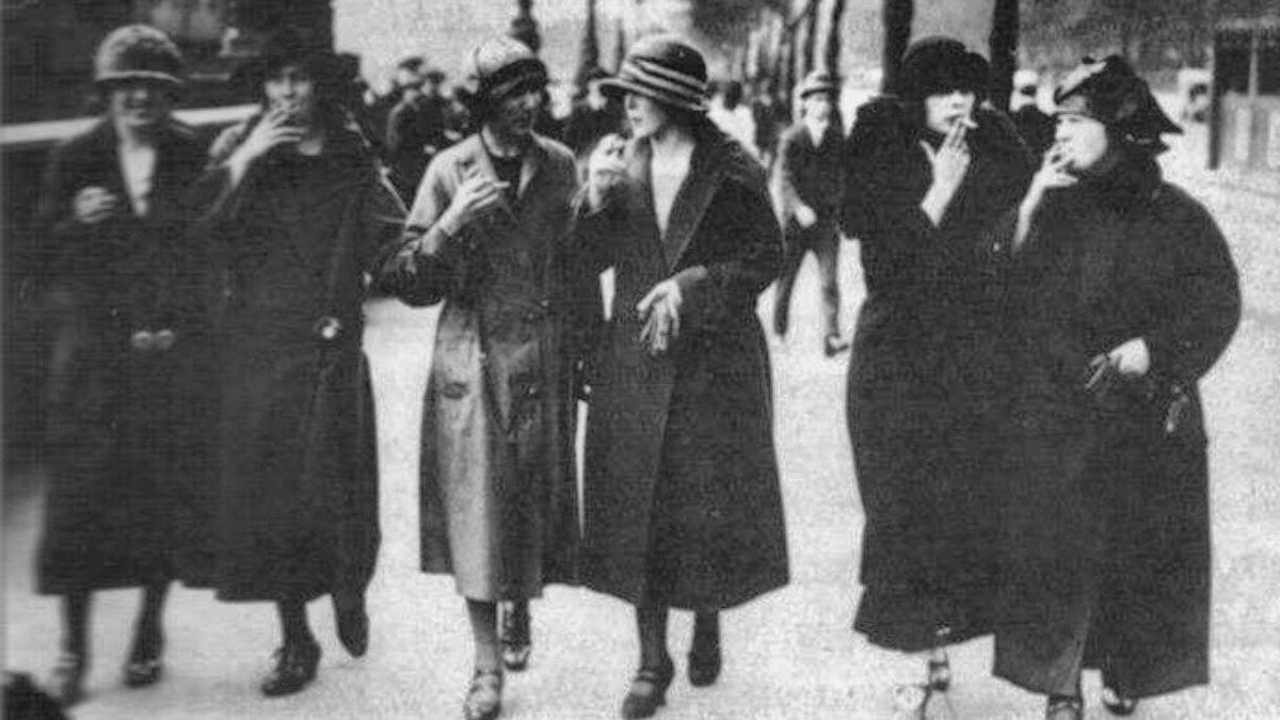
The world hates selling, there is no denying it at this point. Even people who work in sales often apologize while even explaining what they do. But did you ever wonder how we got to this point?
If you're a healer, a coach, or someone who does transformative work and you physically cannot bring yourself to charge what you're worth — I need you to know something. That feeling isn't a character flaw. It's not a mindset problem. And it's definitely not because you lack hustle. It's because you were engineered to feel that way. By a very specific man, using very specific tactics, over 100 years ago.
His name was Edward Bernays. And what he did didn't just create the sleazy car salesman — it made an entire generation of good-hearted people afraid to receive.
The Man Who Weaponized Freud's Work
Edward Bernays was born in 1891. He was Sigmund Freud's nephew and he took his uncle's groundbreaking theories about the unconscious mind and asked a question that changed the world: What if we could use psychology not to heal people, but to manipulate their emotions?
Before Bernays, advertising was straightforward. Here's a product. Here's what it does. Here's the price. If you needed it, you bought it. There was no emotion, no scarcity, sales was tactical. Bernays obliterated that model. He argued that you don't sell products — you sell emotions, identities, and insecurities. You don't tell someone they need a car. You make them feel like less of a man without one. You don't sell cigarettes. You sell freedom.
In 1928, he published a book called "Propaganda" in which he openly stated that an "invisible government" of PR professionals was the true ruling power in democratic society. He wasn't being conspiratorial. He was being proud. He coined the term public relations, he created product placement, and he openly cross-promoted clients in a way that would be considered highly unethical today.
The Campaigns That Rewired a Nation
Bernays didn't just theorize. He ran campaigns that fundamentally altered American culture.
Torches of Freedom (1929)
The American Tobacco Company hired Bernays to expand the cigarette market to women because smoking was not socially acceptable for women at the time. His solution? He staged a feminist protest during New York's Easter Sunday Parade, hiring debutantes to publicly light cigarettes as "Torches of Freedom." He tipped off the press in advance. It was covered as a spontaneous act of liberation. It was a tobacco ad. Millions of women started smoking.
Bacon and Eggs
Americans historically ate light breakfasts. Bernays got 5,000 physicians to sign a letter recommending a "hearty breakfast" for better health. Suddenly, bacon and eggs became the "All-American Breakfast." It was a campaign paid for by the Beech-Nut Packing Company, a pork producer. We still eat it today.
The Guatemala Coup (1954)
When Guatemala's democratically elected government threatened to redistribute unused land held by the United Fruit Company, Bernays manufactured a national media narrative that Guatemala was going communist. The CIA overthrew the government. A PR man helped topple a democracy for a fruit company.
He didn't teach the world to connect or to serve. He taught it to manipulate. And that version of selling is the one we inherited.
The Sleazy Car Salesman: A Deeper Root
If Bernays created the philosophy, the car dealership became its most visible temple.
But the sleazy car salesman archetype didn't appear out of nowhere. According to historian Steven Gelber, author of "Horse Trading in the Age of Cars," the combative and dishonest culture of the showroom floor is a direct descendant of 19th-century horse trading. Horse traders were notorious cheats who hid defects, used verbal misdirection, and treated every transaction as a battle. When cars replaced horses, the culture came with them.
Then in the 1940s, a California used car dealer named Earl "Madman" Muntz teamed up with an ad executive and made a deliberate choice: instead of appearing trustworthy, they would do the opposite on purpose. Muntz dressed as Napoleon in red pajamas, screamed about prices on TV, and promised to smash cars with sledgehammers if they didn't sell. His approach was copied by dealer after dealer, coast to coast. If you have ever seen a Crazy Eddie ad on TV, that is a direct legacy of Muntz.
Layer on a commission structure that rewards manipulation (salespeople earn 20–30% of profit per sale), information asymmetry (the dealer always knows more than the buyer), and confusion tactics like the "four-square method" — and you have a perfectly engineered system of exploitation dressed up as commerce.
Bernays gave corporations the intellectual framework: sell to unconscious fears. Horse trading gave them the adversarial culture. Madman Muntz gave them the persona. And the commission structure gave every individual salesperson a reason to play along.
These forces converged into one archetype — the sleazy car salesman — and that archetype became the cultural symbol for ALL selling.
The Damage Nobody Talks About
Once selling became synonymous with manipulation in the collective unconscious, something devastating happened: everyone with a conscience opted out. Sales became a dirty word and anyone in sales was suspect.
Think about what that means at scale: the people with the most integrity are the ones most likely to undercharge, rely on referrals, or simply hope they'll get clients. The manipulators have zero problem charging. The healers, the teachers, the coaches, the people doing genuinely transformative work? They're the ones refusing to buy into the manipulative sales method. But the problem is, we have nothing to replace it with. This is not a business problem. This is a systemic collective spiritual wound.
The Bernays legacy installed a program that runs in millions of people: selling equals manipulation. And anyone with a conscience internalized that equation and concluded they'd rather struggle than become that person without integrity. The shame you feel about charging for your product or services? It's not yours. It was installed. And it runs so deep that most people don't even know it's there.
Before the Poison: When Exchange Was Sacred
But here's what Bernays and the car lots erased from our memory: for thousands of years, exchange was sacred. Selling — in its original form — was reciprocity, not extraction.
The Potlatch — Pacific Northwest Indigenous Peoples
Among the Indigenous peoples of the Pacific Northwest, leaders demonstrated their power not by how much they accumulated, but by how much they gave away. Wealth flowed outward. Generosity was status. The community sustained its leaders and its leaders sustained the community. This practice was so threatening to colonial governments that Canada literally made it illegal for decades.
The Kula Ring — Papua New Guinea
Eighteen island communities exchanged ceremonial gifts across hundreds of miles of open ocean. Items never stayed with one person for long — they circulated endlessly through the ring. Relationships mattered more than possessions. The exchange itself was the point.
The Ojibwe Gift Economy — North America
Rather than storing food for personal use, Ojibwe families gave it to others. When they hunted, they gave offerings back to nature first. Exchange wasn't separate from spirituality. It was the spiritual practice.
Temple Economies — Mesopotamia, Egypt, India
In ancient Mesopotamia, the first doctors and dentists were priestesses who healed people in the outer courts of the temple. Temples functioned as economic hearts of communities — they employed healers, scribes, artisans, and musicians, redistributed wealth, and fed people during crises. The community didn't just tolerate the healer receiving. They understood that sustaining the healer was sustaining themselves.
In ancient Egypt, evidence from inscriptions suggests that people paid their healers based on what they could afford. Access to care wasn't reserved for the wealthy. The economy was built around reciprocity.
Charles Eisenstein writes in "Sacred Economics" that in gift economies, giving "cements the realization of participation in something greater than oneself." The currency wasn't money. It was gratitude and relationship.
Robin Wall Kimmerer reminds us in "Braiding Sweetgrass" that in Potawatomi culture, the monster is the Windigo: the one who takes too much and shares too little. Hoarding was the sickness. Generosity was health.
Your fear of selling is based on a 100-year-old narrative. Sacred exchange is thousands of years old. Which one are you going to let define you?
The Deprogramming
One man took Freud's psychology, weaponized it for corporations, and turned selling from a natural human exchange into emotional manipulation. That version of selling filtered down through horse-trading culture, through Madman Muntz's screaming car ads, through commission structures designed to reward extraction — and it became the only version of selling most of us have ever known.
But for thousands of years before any of that, exchange was sacred. It was the Potlatch. It was the Kula Ring. It was priestesses healing in temple courts while the community made sure they could keep going. Receiving wasn't selfish. It was how the cycle of life stayed intact. Even today, all of us can remember a product or service we purchased that was worth every penny and didn't feel manipulative. But our natural human negativity bias conveniently makes us forget the positive interactions and remember the negative ones.
So if you're someone who struggles to ask for money, you don't need another marketing strategy. You need deprogramming. You need to understand that your block around money isn't personal. It's generational. It was installed by specific people, in specific decades, for specific commercial reasons. And you can reprogram your mind.
That's what the Quiet Selling Method™ is about. Not manipulation. Not Bernays' playbook. It's selling the way it was meant to be: connection, reciprocity, service, and truth. Your ancestors knew how to receive. That knowledge lives in you. It's time to remember.
Christine Volden is the creator of the Quiet Selling Method™ and helps spiritual entrepreneurs, healers, and conscious entrepreneurs reclaim the ability to receive — without manipulation, without shame, and without becoming someone they're not.